

Raising a Junior Golfer Without Losing the Joy
Affiliate Disclosure: This article contains affiliate links. If you make a purchase through one of these links, Golf Mom Mindset may earn a commission at no additional cost to you. I only recommend products and services I genuinely believe may be helpful to golf families.
How to support your child’s dreams, navigate the pressure and protect your relationship through every round.
Junior golf can be an incredible journey for a child—and for the parent walking beside them. It teaches patience, discipline, honesty, resilience and the courage to keep going after a difficult round. It can also bring pressure, comparison, disappointment and big emotions for the entire family.
As parents, we want to help our children succeed. We invest in lessons, equipment, practice time, tournament fees and travel because we believe in them. But somewhere between wanting to support their dream and trying to prepare them for the next competition, it can become easy to forget the most important part of the journey: our relationship with our child.
Our children may remember the trophies and low rounds, but they will also remember how they felt when they looked for us after a missed putt. They will remember the tone of the car ride home. They will remember whether golf felt like a place where they could learn—or a place where they had to be perfect.
Your Child Is More Than Their Score
A score tells us what happened during one round of golf. It does not tell us who our child is.
It cannot measure courage, kindness, effort, honesty or how hard they worked to recover after a bad hole. It does not show the confidence it took to compete, the maturity required to shake another player’s hand or the resilience needed to finish a round that did not go as planned.
When children believe their value changes with their performance, golf can quickly become heavy. When they know they are loved and supported regardless of the number on the scorecard, they have the emotional safety to take risks, learn and grow.
After a round, try beginning with connection instead of correction:
“I loved watching you play today.”
“What are you most proud of?”
“Was there a moment that felt especially hard?”
“Do you want to talk about the round now, or would you rather wait?”
Sometimes the most supportive thing we can offer is not advice. It is a snack, a hug and a quiet ride home.
Golf Mom Recommendations: Tournament-Day Comforts
Long tournament days are easier when we have a few familiar comforts ready for both the golfer and the parent. I keep our favorite snacks, water bottles, cooling towels, sunscreen and other tournament-day essentials close by.
Shop My Favorite Tournament-Day Essentials →
Let the Coach Coach—and Let the Parent Be the Safe Place
Parents see potential in their children, which makes it tempting to analyze every swing, decision and missed opportunity. But when a child already has a coach, constant instruction from a parent can create confusion and make every practice session feel like another evaluation.
A coach’s role is to develop technique, strategy and performance. A parent’s role is different—and just as valuable. We can provide encouragement, perspective, consistency and a safe place for our children to process both success and disappointment.
That does not mean parents should be uninvolved. We can ask coaches thoughtful questions, reinforce agreed-upon goals and help create healthy practice routines. But our children also need moments when they can simply enjoy golf with us.
Not every trip to the course needs to be a lesson. Sometimes it can be nine relaxed holes, a putting contest or an afternoon spent laughing in the cart.
Golf Mom Recommendations: Make Practice Fun
The right tools can make practice feel more like play and less like another evaluation. I have gathered some of our favorite putting games, chipping targets, practice balls and other junior-golf training essentials.
→ Shop My Junior Golf Practice Favorites
A comfortable, well-fitting glove can also help a young golfer feel more confident on the course. Shop our favorite BRUCE BOLT junior golf gloves and use code GMM15 for 15% off.
Protect the Car Ride Home
The car ride home after a tournament can shape how a young golfer feels about the entire experience.
Immediately reviewing mistakes may feel productive to us, but a child who is already disappointed often hears criticism rather than guidance. Their nervous system may need time to settle before they can learn from what happened.
Before the tournament, agree on what the ride home will look like. You might allow your child to decide when—or whether—they want to discuss the round. If they do want to talk, listen before offering solutions.
A helpful question is:
“Would you like me to listen, encourage you or help you think through it?”
That simple choice gives a child some control during an emotional moment and helps us respond to what they truly need.
Be Careful With Comparison
Junior golf can make comparison feel unavoidable. We see rankings, scores, trophies, swing videos, sponsorship announcements and carefully edited highlights on social media. It may appear that every other golfer is advancing faster.
But every child develops on a different timeline. One golfer may mature physically earlier. Another may have more access to coaching, tournament experience or financial resources. A child who struggles today may be developing the resilience that serves them years from now.
Comparison shifts a child’s attention away from their own progress. Instead, help them notice personal growth:
Did they recover more calmly after a difficult hole?
Did they make a brave decision?
Did they follow their routine?
Did they show good sportsmanship?
Did they learn something they can use next time?
The goal is not to pretend that scores do not matter. Competitive golfers naturally want to improve and win. The goal is to keep results in their proper place: as information, not identity.
Rest Is Part of Development
More tournaments, more practice and more instruction do not always create better results. Children need rest, unstructured play, friendships and interests outside of golf. Taking a break does not mean they are less committed. It may be exactly what allows their motivation to return.
Watch for signs that the balance may be off:
They regularly dread practice or tournaments.
They become unusually anxious about disappointing adults.
Every conversation seems to return to golf.
They no longer enjoy playing unless a score or prize is involved.
They are physically exhausted or frequently dealing with pain.
A healthy schedule should leave room for a child to be a child. Long-term development is not a race to fit the most golf into the shortest amount of time.
Ask Whose Dream It Is
Our children’s goals can become deeply connected to our own hopes, sacrifices and identity. That is understandable—especially when we have invested so much love, time and energy into the journey.
Still, it is important to pause and ask:
“Is this what my child wants right now, or is this what I want for them?”
Their dream may grow, change or temporarily become less important. Our job is not to decide the entire destination for them. It is to help them understand their options, build healthy habits and feel safe telling us what they truly want.
Support does not mean removing standards or allowing them to quit whenever something becomes difficult. It means staying curious enough to understand the difference between temporary frustration, normal discomfort and genuine burnout.
What Young Golfers Need Most
Young golfers need coaches who teach them, opportunities that challenge them and routines that help them improve. But from their parents, they need something even more foundational.
They need to know:
I am proud of your character, not only your results.
You can tell me when this feels hard.
A bad round will never change how I see you.
You do not have to earn my love through achievement.
We are on the same team.
Parenting a junior golfer does not require us to respond perfectly after every round. We will sometimes say too much, react emotionally or allow our own fears to take over. What matters is recognizing it, repairing the moment and continuing to grow alongside our child.
One day, the tournament schedules, range sessions and early-morning tee times will end. The scorecards may be forgotten, but the relationship we built along the way will remain.
Let’s raise golfers who are confident enough to compete, resilient enough to struggle and secure enough to know they are loved through every high and low.
Because the greatest win in junior golf is not simply raising a successful golfer. It is raising a healthy, happy child who still wants us beside them for the journey.
Golf Mom Recommendations
Supporting a junior golfer involves more than what happens on the scorecard. Here are some of the products, brands and services our family uses, loves or recommends for practice, tournaments and golf travel.
→ Shop My Complete Junior Golf Amazon Storefront
Find junior-golf practice tools, tournament-day necessities, travel products and golf-family favorites in one place.
→ Shop Our Mom-and-Son Golf Looks on LTK
→ Shop BRUCE BOLT Junior Golf Gloves
Use code GMM15 for 15% off eligible purchases.
→ Shop Cute & Stylish Golf Clothes for Kids
→ Explore Ship Sticks for Golf Travel
Ship your clubs directly to your golf destination and make tournament travel a little easier.
Use GMM20 for 20% off your next shipment.
Stay Connected
For more honest conversations and practical resources about raising a junior golfer:
Follow @golfmommindset on Instagram.
Listen to The Golf Mom Mindset Podcast on Apple Podcasts, Spotify, YouTube, Amazon Music and iHeartRadio.
Visit GolfMomMindset.com for more junior-golf parenting articles and resources.
Share this article with another golf parent who may need this reminder.
Affiliate links and discount codes may result in Golf Mom Mindset earning a commission or receiving credit, at no additional cost to you. Discounts and eligibility may vary.
Written by Alesha Nicole - Golf Mom Mindset
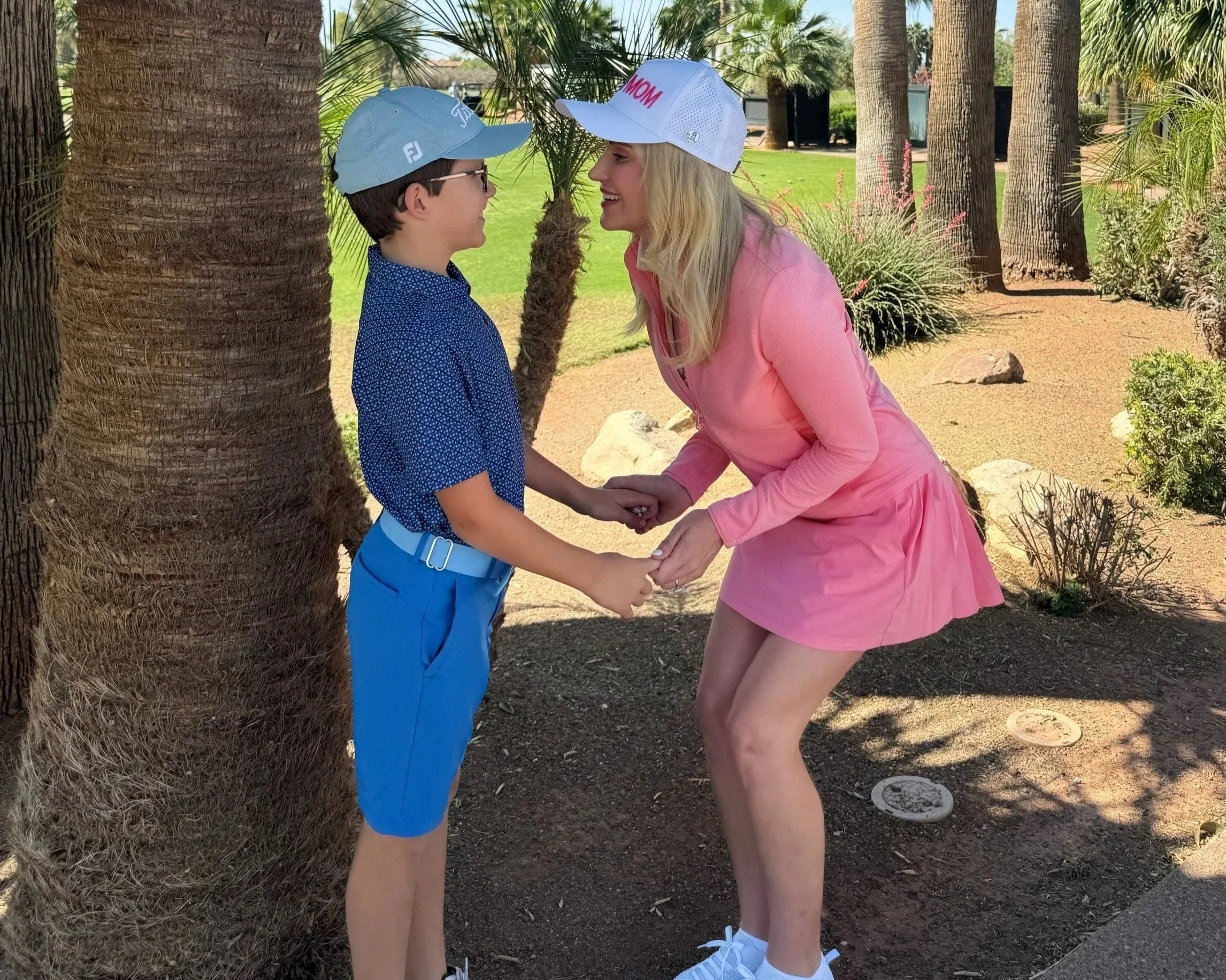
A son’s belief in himself often begins with a mother who believed in him first
Written by: Alesha Nicole - Golf Mom Mindset
